

This sub-area of the FPS Core Facility is focussed on adsorption and the advanced surface and textural characterization of nanoporous materials. Expertise as well as state-of-the-art equipment and scientific infrastructure is provided by the Institute of Separation Science and Technology (TVT), headed by Prof. Matthias Thommes.
The institute performs cutting edge research in the various areas of separation science. The research deals with the adsorption, phase and wetting behaviour of fluids in pores and at the adsorbent interface. This makes it possible to obtain information about the surface and pore structure of materials, but also to comprehensively analyse the adsorption properties of materials. A main goal is to build a link between adsorption properties and characteristics of adsorbents with applications in gas and energy storage (e.g., hydrogen, carbon dioxide, methane), separation and heterogeneous catalysis.
Within the core facility, a wide spectrum of analytical tools will become available to users with an interest in the characterization of nanoporous materials and their adsorption properties. The range of experimental methods includes a whole series of state-of-the-art techniques for determining the adsorption and gas storage properties of adsorbents and their textural characterisation.
The team of the Institute of Separation Science and Technology is looking forward to providing expertise and to assist you in finding the optimal solution for your desired research questions and applications.
Our Services & Research Support


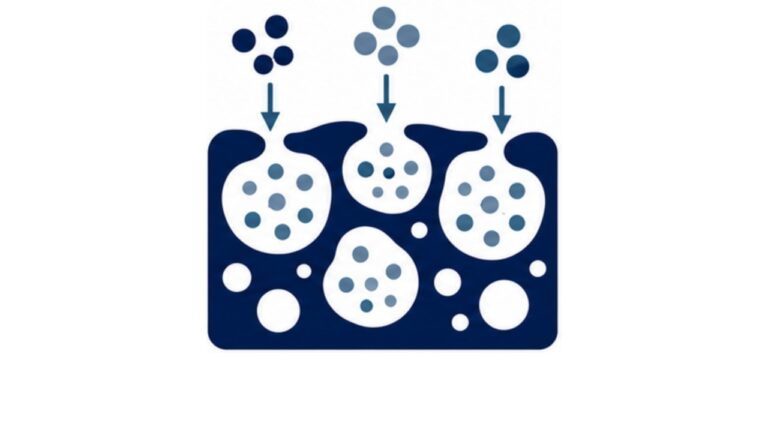
Instrumentation & Equipment Overview
The Unit Functional Porous Networks provides access to a comprehensive suite of state-of-the-art instrumentation dedicated to the advanced textural and adsorption characterization of nanoporous materials. Our technical infrastructure is tailored to support both academic research and industrial applications through high-precision measurements.
Our experimental capabilities include:
Manometric Gas Adsorption: High-precision instruments capable of performing measurements with a wide range of adsorptives, including nitrogen, argon, krypton, carbon dioxide, and butane at various temperatures, to characterize surface areas, pore size and connectivity but also adsorption capacities of nanoporous materials.
Vapor Sorption Analysis: Advanced manometric and gravimetric systems for investigating the adsorption behavior of water and organic vapors.
High-Pressure Gas Adsorption: Specialized gravimetric systems designed for high-pressure measurements using gases such as hydrogen, carbon dioxide, and methane, crucial for evaluating gas storage capacities and separation processes.
NMR Relaxometry: Cutting-edge time-domain NMR techniques to study fluid behavior, wettability, surface area, confinement effects, and pore sizes of wet nanoporous materials and powders.
Mercury Porosimetry: Specialized equipment for determining macro- and mesopore size distributions.
Helium Pycnometry: Technique for the determination of skeletal densities.
Inverse Size Exclusion Chromatography (ISEC): Robust chromatographic setup to analyze the pore size of stationary phase materials.
You can find more information on our instrumentation systems here.