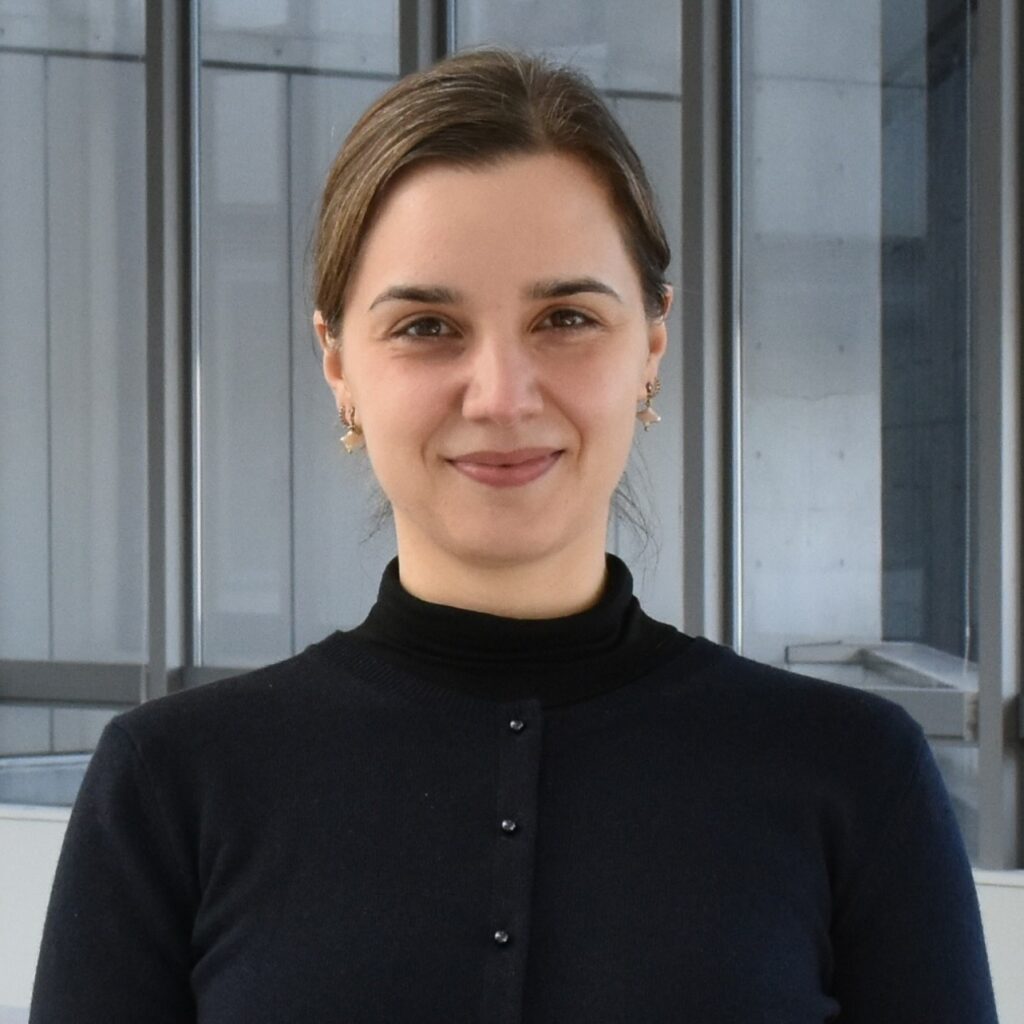
Malvina Supper – University of Tokyo, Japan
Separating polymers and oligomers in liquid chromatography remains challenging because their transport is strongly influenced by molecular size, diffusivity, and solvent-dependent effects. In my PhD work, I used polyethylene glycol (PEG) as a model system to investigate how retention and diffusion determine peak shapes and achievable resolution. Based on equilibrium retention data, I developed and applied a thermodynamic model for linear sorption to describe the systematic increase in retention with chain length. Complementary diffusion (peak-parking) experiments and loading studies were used to rationalize peak broadening and to link analytical conditions with preparative-scale behaviour. Together, this provides a mechanistic framework that connects polymer retention, diffusivity, and chromatographic separation performance.
In my postdoctoral research, I am extending this methodology to evaluate metal–organic frameworks (MOFs) as emerging stationary phases for HPLC. Recent studies highlight characteristic transport behaviour and structural features of MOFs 1-3, making them an interesting platform for applying established retention and diffusion analysis tools.
1. Torimoto, A. et al., J. Chromatogr. A 2026, 1765, 466481.
2. Kotova, A. A. et al., Coord. Chem. Rev. 2022, 455, 214364.
3. Wei, H.-Y. et al., Analyst 2025, 150, 3992–4007.
Soraya Caixeiro – University of Bath, UK
Dr Soraya Caixeiro is a Lecturer (Assistant Professor) in NanoBioPhotonics in the Department of Physics at the University of Bath, UK. She earned her PhD in Physics from King’s College London in 2018 and subsequently undertook postdoctoral research at the University of St Andrews. In 2021, she joined the Humboldt Centre for Bio- and Nanophotonics at the University of Cologne, Germany as a senior postdoc. In September 2023, Soraya was appointed as an Independent Prize Fellow in Physics for Healthcare at the University of Bath, where she is establishing her Lab.
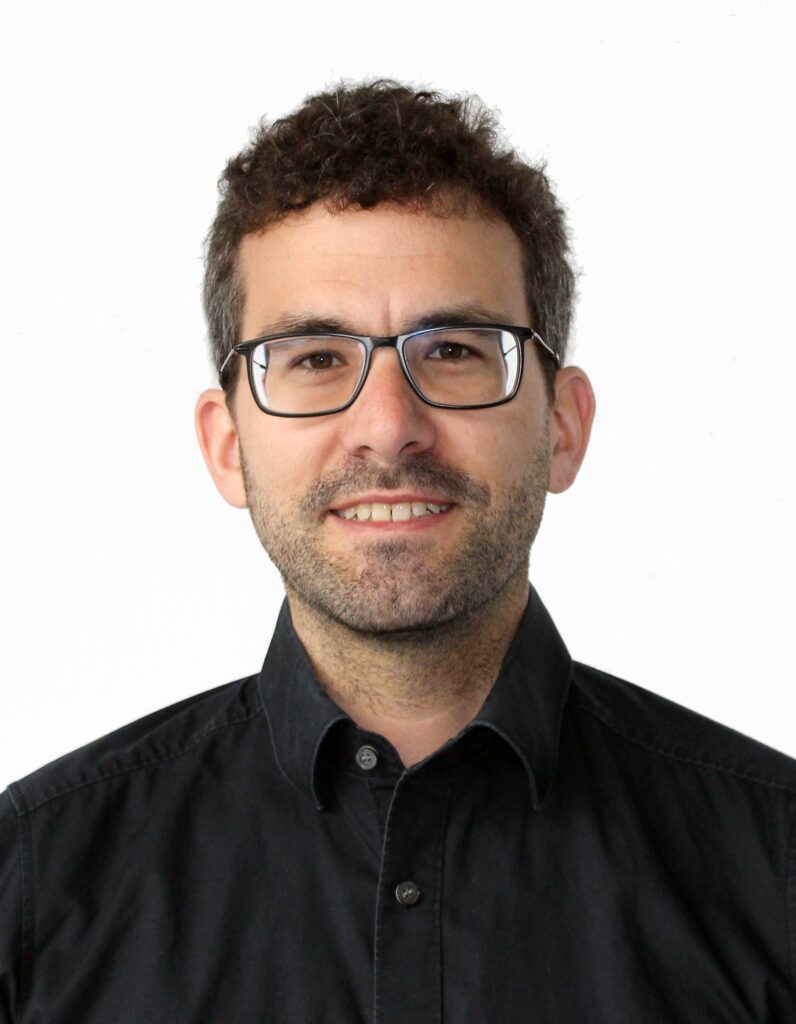
Markus Retsch – Bayreuth University, Germany
Prof. Markus Retsch studied Polymer and Colloid Chemistry at the University of Bayreuth from 2001 to 2006. He then moved to the Max Planck Institute for Polymer Research in Mainz to pursue his Ph.D., where he worked on colloidal assembly structures under the supervision of Prof. Jonas, with research stays at FORTH in Heraklion, Crete. From 2009 to 2011, he spent 2.5 years as a postdoctoral researcher at the Massachusetts Institute of Technology (MIT) in Cambridge, MA, USA, in the Department of Materials Science and Engineering. In August 2012, Prof. Retsch was appointed Junior Professor for Polymer Systems at the University of Bayreuth. In 2013, he received a Lichtenberg Professorship from the Volkswagen Foundation, followed by an ERC Starting Grant in 2016. Since 2018, Prof. Retsch has held the Chair for Physical Chemistry I at the University of Bayreuth. He is the deputy spokesperson of the CRC MultiTrans. His research focuses on light-matter interactions, including passive cooling applications, heat transport in nanostructured systems, the development of thermal transport metrology, and the synthesis and properties of functional gradient materials.
Andreas Fery – Leibniz Institute of Polymer Research Dresden, Germany
Andreas Fery is head of the institute for Physical Chemistry at Leibniz Institut für Polymerforschung Dresden since 2015. He studied Physics at Konstanz University and did his PhD and habilitation at the Max-Planck Institute for Colloids and Interfaces/Potsdam University in 2000. In 2007 he joined Bayreuth University as professor and received an ERC starting grant in 2012. His research interests are in in Polymer science and Colloid and interface science with an emphasis on soft functional materials and sustainability. He is coordinating the graduate school “From particle based materials to optical and electronic devices” and he is deputy spokesperson of the cluster of excellence “Responsible electronics in the climate change era”.